
What Can Credit Unions Learn from a Hardware Store?


Corey A. Waite is a leading commercial real estate advisor to the financial services industry. As Founder and CEO of Rubicon Concierge Real Estate Services, Corey works directly with senior executives coast-to-coast to deliver strategic plans and transactional services focused on optimizing the needs of employees, clients and members.

Speaking of Stewardship – Boards of Directors & Real Estate
Real estate is one of the most important – and costly – aspects of a credit union’s existence. Yet, for all their expertise, knowledge about why and how real estate decisions are made are not always widely understood by Boards of Directors. This can be a problem, especially for credit union members.

Credit Union Real Estate Decisions: Say What?!?
Like all industries, commercial real estate has its own set of terms and acronyms. They all make (somewhat) perfect sense if you happen to actively work in the industry. But to the majority of humans – such as credit union board members — real estate jargon sounds like a lot of mumbo jumbo. So, let’s simplify.

Credit Union Real Estate Decisions: But What If?
Driven by the COVID-19 and its hideous variants, the world is changing in myriad ways. Remarkably, many industries and organizations have used the pandemic as a way to re-invent themselves and catapult their businesses forward. Those that assume that things will simply “return to normal” are likely mistaken.

How to Do Good While Doing Well
It’s in the credit union industry’s DNA to help serve the under-served. But philanthropy comes at a price. The question is how to balance what’s good with what’s right.

Credit Union Real Estate Decisions: COVID and Your Culture
COVID has impacted everything, including where and how people are going to work. For credit unions, the challenges are particularly unique.

Ballparks, Branches and the Future of Banking
For those who think the future of brick & mortar banking is going the way of the dinosaur, take yourself out to a baseball game and think of fans as your members.

Own Your Headquarters? Maybe You Shouldn’t.
Credit Unions have traditionally owned their headquarters. But, like so many other things, COVID is upending the tried the true. Here’s the time may be right to re-consider the age-old own vs. lease strategy.

Why it’s Time to Do Things Differently
Commercial real estate brokers serve banks and credit unions exactly alike. But they’re not. Credit unions are different which means the service criteria should differ, as well.
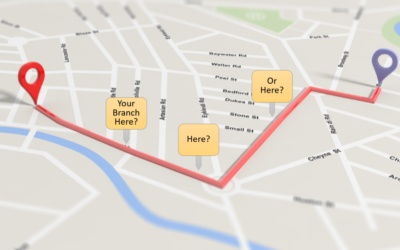
Credit Union Real Estate: Walmart vs. Target?
Locating your branches near a Walmart or Target is a good idea, but which one? Based on your membership profile, the answer may seem obvious … but guess what?

Preceding the Puck – Credit Union Real Estate Reimagined
Appropriately so, the pace of decision making in the credit union industry has always been deliberate. However — especially post-COVID — a new set of variables that are coming into play.