
Rx for Rising Construction Costs: Absolute Flexibility.

I read a lot about the financial services industry and the many factors that impact it – particularly from a real estate portfolio perspective. Recent hot topics range from operations and all-things-financial to market demographics, workspace planning and the remarkable changes taking place regarding workforces-at-large.
Keeping up on these topics (along with many others) is useful. But what I find to be even more valuable than reading is listening. Listening to our clients and absorbing the real world information, insights and concerns they regularly share with us.
Lately, much of what we’ve been hearing has been focused on the meteoric rise in construction costs and how that is impacting their growth plans.
For a number of our credit union clients, this “cost catapult” isn’t simply hand-wringing about overruns on individual projects, but how those higher costs – ranging from 25%-to-100% (or more) above original budget projections – are forcing many to re-consider their current project pipeline, not to mention their long-term growth strategy.
In the face of board-approved budgets based on historical construction costs, we know of numerous credit unions that have scaled back from five expansion projects to three. Others from three to one. Some have suspended their portfolio growth plans altogether.
Upon hearing this, we encourage our clients to think about alternatives that are available to them other than “full stop.” In short, we encourage them to think about “what if?” To consider how being adaptable and flexible can leave the door open to portfolio growth and a competitive edge, albeit differently than originally planned.
Five “What Ifs?”
1. Lease Instead
- While it’s always tempting to purchase land and develop from the ground up – re-think that. (This also includes buying an existing property and pouring large sums into system upgrades and re-modeling). This strategy – especially in de novo markets – was costly before and even more so now. Instead, we suggest leasing space, assess your resulting profitability and consider purchase and/or ground-up development at a later date.
2. Improve and Enhance
- Search for existing properties that require less tenant improvements costs (TI’s). The obvious solutions are prior banks – especially those with good public and signage visibility. Again, leasing over buying is always a major cost saver.
3. Do More with Less
- Re-consider the total size of your future branches and what you plan to put inside them. Not all branches need to serve the same purpose. Understand your members in a particular market and build out your future spaces to reflect what is specifically required expressly for them.
4. Move Your Market
- Established markets with mid-to-high household incomes are always the most costly. Use this time as an opportunity to consider expanding into lower cost markets, especially low-moderate income (LMI) communities that will greatly value your presence.
5. Convert Your Costly HQ into Future Growth
- These days it not only costs more to buy and build, it also costs more to own. Expenses for maintenance, upgrades, insurance, utilities, property taxes and more are all way up and are going to remain that way for the foreseeable future. For this reason, many of our CU clients are funding their future by selling their HQ’s, leasing even better space at a lower cost and using this un-locked liquidity to fund future expansion.
Slower Yes, Stopping No
So yes, construction costs are high and likely to remain that way. Not to mention the rising costs for professional services, labor and money itself. Waiting and hoping for near zero interest rates and low commodity material prices is just that – wishful thinking. Which, as we all know, is not a strategy.
As horrible as COVID-19 has been, the pandemic also proved how innovative businesses are when they let go of “what was” and pivot to what “can be.” Inflation and an impending recession are difficult but not existential deal breakers. They are, in fact, opportunities to re-visit prior plans and forge new ones.
It’s also helpful to understand that the real estate market traditionally lags behind the rest of the economy. i.e., real estate prices rise and fall slower than, say, steak and sedans. So adjustments in purchase prices, lease obligations and construction costs will take longer to adjust than most aspects of the economy.
All things considered, high construction costs are tough but it doesn’t mean you can’t continue to grow and thrive. It’s just that how you do it may be different than originally planned.

Corey A. Waite is a leading commercial real estate advisor to the financial services industry. As Founder and CEO of Rubicon Concierge Real Estate Services, Corey works directly with senior executives coast-to-coast to deliver strategic plans and transactional services focused on optimizing the needs of employees, clients and members.

Is Sale/Leaseback Right for You?
With interest rates high and still rising, more and more financial organizations are turning real estate holdings into low-cost cash generating assets.

The Rebellious CEO
Many organizations do financially fine by relying on practices deemed “tried and true.” But sometimes, visionary executives emerge that re-define success and lead their organizations in ground-breaking and remarkable ways. A new book profiles twelve of these “rebellious” leaders.

Intelligence is not Artificial
Artificial Intelligence is a powerful tool for the banking industry. But the ultimate value of its future impact will depend on the questions it is asked.

Marketing Matters
Navy Federal Credit Union is the industry’s largest CU thanks, in large part, to its marketing efforts. But even without Navy Federal’s ample budget, every credit union can grow its business with the right marketing strategy driven, first and foremost, by research.

CDFI’s – The Magical Map to Success
Far too many people struggle to access credit that can be a gateway to a better life and stronger community. Slowly, more and more credit unions are turning the key to prosperity through certification to the CDFI Fund.

Brand Confidence Begins at the Branch
While improving service through technology is vital, it is not the only priority for re-assuring members that your credit union is well-funded and viable. Branch quality remains a key strategy for delivering the message that your organization is strong, capable and focused on the future.

CUSO’s, Capital and the Culture of Credit Unions
During these uncertain times, raising capital is no easy task, even for the banking industry. Fortunately, through the collaborative nature of CUSOs, credit unions have a unique resource to help turn real estate assets into a pathway for greater liquidity and growth.

Still Banking on Branches
Silicon Valley Bank (and others), inflation, fed interest rates and future job uncertainty are all fueling concerns about and within the banking industry. Yet, in the face of all this uncertainty, credit unions and community banks are still expanding their branch networks. Why? And are they going about it in the right way?

Credit Union Real Estate Decisions: Branching Better
Despite all the gloomy pandemic (and post-pandemic) predictions, credit unions from coast-to-coast are bullish on branches.
Your People, Your Workspace, Your Future
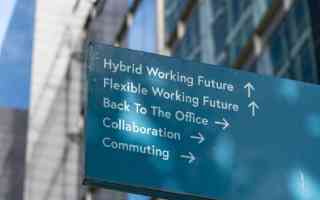
Nearly every firm we know has — or is in the process — of evolving their workplace in order to recruit and retain key talent and grow their business.

Credit Union Real Estate Decisions: Listen, Read, Absorb
A lot of smart people go deep to deliver powerful information and insights that can benefit your business. And the best leaders are those who carve out the time to find, consider and, if and when appropriate, employ what they’ve learned.

Flexibility as Fact
For all its angst, the pandemic has been a catalyst for change throughout the credit union industry. CU’s of all size are embracing innovation and re-considering everything … especially when it comes to design and purpose of their branches.